
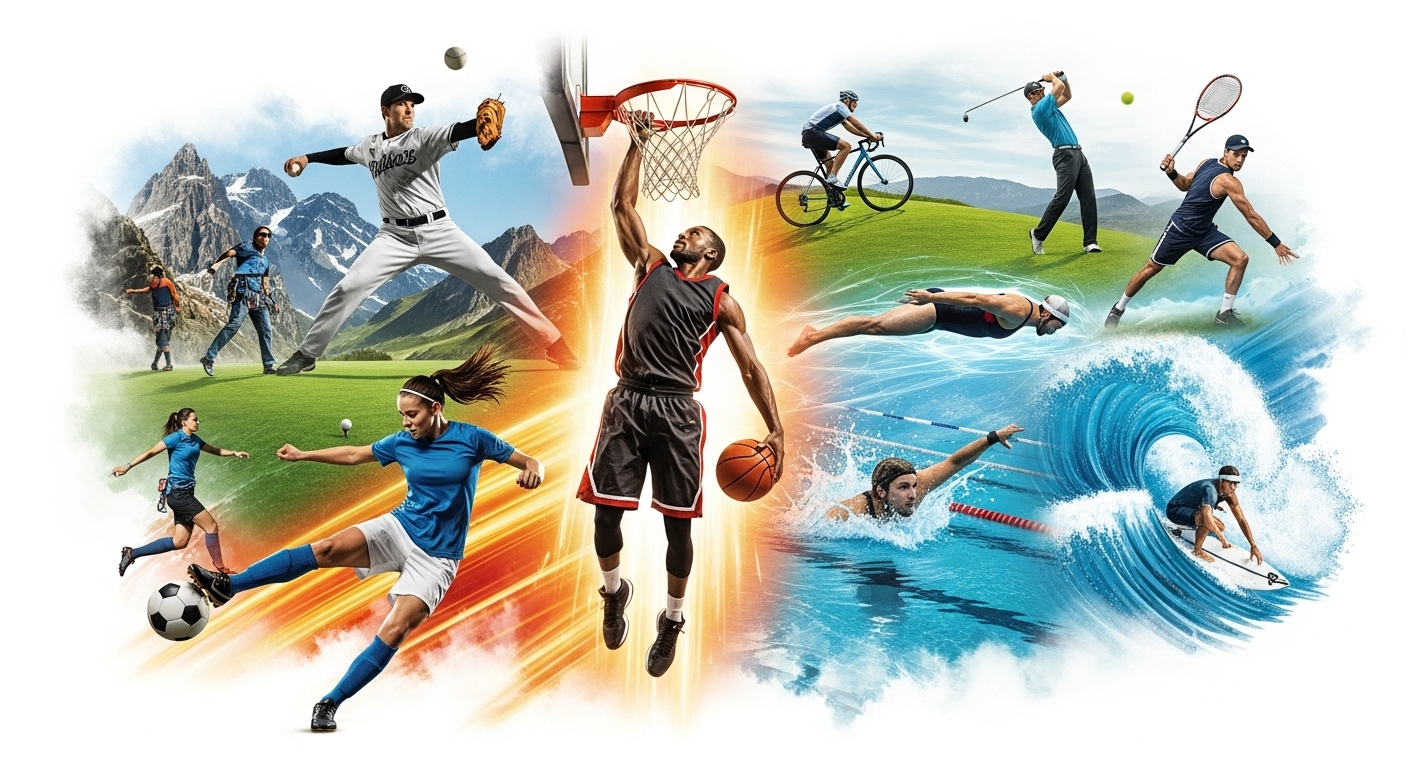
Sports have always been more than just a form of entertainment. They represent the culmination of human effort, discipline, and the constant pursuit of excellence. From ancient rituals to the global sporting events we watch today, sports have shaped societies, cultures, and economies. This blog post delves into the evolution of sports, from their origins in ancient civilizations to the present-day multi-billion-dollar industry that unites billions of people worldwide. Along the way, we will explore how sports have transcended their original functions, adapting to changing societal needs and technological advancements while maintaining their deep cultural significance.
The Birth of Sports: Ancient Civilizations and Rituals
The origins of sports can be traced back to the earliest human civilizations. In many cases, sports were linked to religious rituals, military training, and the desire to showcase physical prowess. Ancient societies valued strength, endurance, and skill, which is why they often incorporated physical challenges into their cultural and religious practices.
In ancient Egypt, sports such as archery, wrestling, and running were common. These events were not only for entertainment; they had practical applications, particularly in military training. For instance, archery was crucial for hunting and warfare, while wrestling and running were essential for physical strength and agility in battle. Artifacts and inscriptions suggest that these physical contests were also a form of religious offering, where the prowess of the victor was seen as a gift to the gods.
The most famous early example of organized sport comes from ancient Greece. The ancient Greeks believed in the connection between mind and body, emphasizing the importance of physical fitness alongside intellectual pursuits. The Olympic Games, first held in 776 BCE in Olympia, became the centerpiece of Greek athletic life. Initially, the Games consisted of a single event: a footrace. Over time, the competition expanded to include wrestling, boxing, chariot racing, and the pentathlon. Athletes in ancient Greece competed for glory and honor, as winning the Olympic Games was considered one of the highest achievements in Greek society.
The ancient Olympics were not just about individual triumphs. They were deeply political and religious, held in honor of Zeus, the king of the Greek gods. The Games were a way for different city-states in Greece to unite and celebrate their shared values. In addition to the Olympic Games, other athletic festivals, such as the Pythian Games, the Nemean Games, and the Isthmian Games, further demonstrated the significance of sports in Greek culture.
Roman Influence: Spectacle and Entertainment
While the Greeks emphasized the idea of sport as a means of personal excellence and honor, the Romans adapted sports to fit their own imperialistic and entertainment-driven culture. The Romans took athletic competitions to a new level of spectacle, with grand public games designed not only to showcase physical skill but also to entertain and control the masses.
One of the most infamous Roman sports was gladiatorial combat. Gladiators, often slaves or prisoners of war, fought to the death in arenas like the Colosseum in Rome. These battles were a form of public entertainment that served both to display the power of the Roman Empire and to distract the populace from political or economic unrest. The gladiatorial games became a symbol of Roman might and cruelty, representing the Roman emphasis on power and control.
In addition to gladiatorial contests, Romans also enjoyed chariot races, which took place in massive venues such as the Circus Maximus. These races were fast-paced and dangerous, with competitors racing through treacherous tracks at high speeds. Unlike the individualistic approach to sports in Greece, Roman sports were more about the spectacle and the entertainment value they provided to the public.
The rise of Christianity in the 4th century CE marked the beginning of the decline of Roman sports. Christian leaders condemned the violent nature of gladiatorial combat and other public games, which were seen as morally corrupt. As the Roman Empire weakened, sports became less formalized, and the grand spectacles of the Roman Empire slowly faded into history.
The Middle Ages: The Rise of Folk Sports
After the fall of the Roman Empire, the Middle Ages saw a decline in organized sports, especially those that involved violence or were associated with Roman pagan rituals. However, physical activity and competition did not disappear altogether. The Middle Ages witnessed the rise of folk sports, which were often localized and informal. These games were more about community involvement and local pride than formal competition.
One of the most popular forms of medieval sport was jousting, a tournament where knights would charge at each other with lances. Jousting was both a form of military training and public spectacle. It was popular among the European nobility, who would hold grand tournaments to display their skills and honor their feudal lords. Alongside jousting, archery contests and sword fighting were also common, as they were seen as crucial skills for knights and soldiers.
For the common people, folk games such as ball games, wrestling, and foot races were common forms of recreation. These informal contests were played during festivals, harvest celebrations, and other community gatherings. Although they lacked the formalized rules of modern sports, these folk games laid the foundation for many of the team-based sports that would emerge in later centuries.
The Renaissance and the Rebirth of Physical Culture
The Renaissance period in Europe, which began in the 14th century, brought about a cultural and intellectual awakening. During this time, there was a renewed interest in the classical ideals of Ancient Greece and Rome, including the importance of physical fitness and athleticism. The idea of the “Renaissance man” — an individual who excelled in both intellectual and physical pursuits — became popular.
As a result, the 16th and 17th centuries saw the rise of more formalized sports. In England, for example, cricket began to take shape as a distinct sport. Though initially played informally, cricket became more organized as the Renaissance ideals of individual skill and teamwork gained prominence. The codification of the rules of cricket in the 18th century helped to turn it into a professional sport.
Similarly, other games like tennis, football, and archery began to take more structured forms during the Renaissance. The sport of tennis, which has origins in medieval France, began to evolve into the version we recognize today. Football, too, had its early roots in England, with different villages and towns playing their own versions of the game.
The Renaissance period also marked the beginning of the modern concept of physical education. Philosophers and educators began to recognize the importance of physical activity as a means of cultivating both the body and the mind. This thinking would later influence the development of sports and physical education in schools across Europe and, eventually, the world.
The Birth of Modern Sports in the 19th Century
The 19th century was a pivotal time in the development of modern sports. The Industrial Revolution brought about rapid urbanization and increased leisure time for the working class, providing the perfect environment for the rise of organized sports. In England, the codification of rules for sports like football, rugby, and cricket laid the foundation for the modern forms of these games.
In 1863, the Football Association (FA) was established in England, standardizing the rules of football (soccer) and marking the birth of modern soccer as we know it today. This was followed by the formation of rugby unions and cricket leagues, which helped formalize the competitive structures of these sports. These standardized rules made it easier for clubs and teams to compete against one another, leading to the rise of professional leagues.
The 19th century also saw the birth of other major sports. Basketball was invented in 1891 by Dr. James Naismith in the United States, while baseball had already begun to formalize its rules in the late 1800s. These new sports, along with the established ones, contributed to the global spread of athletic competition.
In addition to the rise of organized team sports, the late 19th century saw the revival of the Olympic Games. Pierre de Coubertin, a French educator, revived the ancient Greek tradition of the Olympics in 1896, and the modern Olympic Games were born. The Olympics provided a platform for international athletic competition and became one of the most prestigious sporting events in the world.
The 20th Century: The Rise of Global Sports and Commercialization
The 20th century witnessed the globalization of sports, driven in large part by advancements in transportation and communication. The growth of radio and television allowed sports to reach a global audience, making it possible for people around the world to follow their favorite teams and athletes in real-time.
In the United States, sports like baseball, basketball, and American football grew in popularity, while European nations embraced football (soccer) as the dominant sport. In addition, international competitions like the FIFA World Cup and the Summer and Winter Olympic Games grew in significance, drawing millions of spectators from every corner of the globe.
The 20th century also saw the commercialization of sports. The rise of professional leagues, like Major League Baseball (MLB), the National Football League (NFL), and the National Basketball Association (NBA), turned sports into a multibillion-dollar industry. Sponsorship deals, television contracts, and merchandise sales became an integral part of the sports business, while athletes themselves became global celebrities.
At the same time, new forms of competition emerged. The rise of motorsports, boxing, and tennis brought new stars to the international stage. Athletes like Muhammad Ali, Michael Jordan, Pelé, and Serena Williams transcended their sports, becoming cultural icons and ambassadors for their respective games.
The 21st Century: Technology, Diversity, and Globalization
The 21st century has brought even more innovation and change to the world of sports. Advancements in technology have transformed how athletes train, how games are played, and how fans experience sports. Wearable devices and performance tracking technology have allowed athletes to push the boundaries of human performance. Video analysis and instant replay systems have changed how sports are officiated, ensuring fairness and