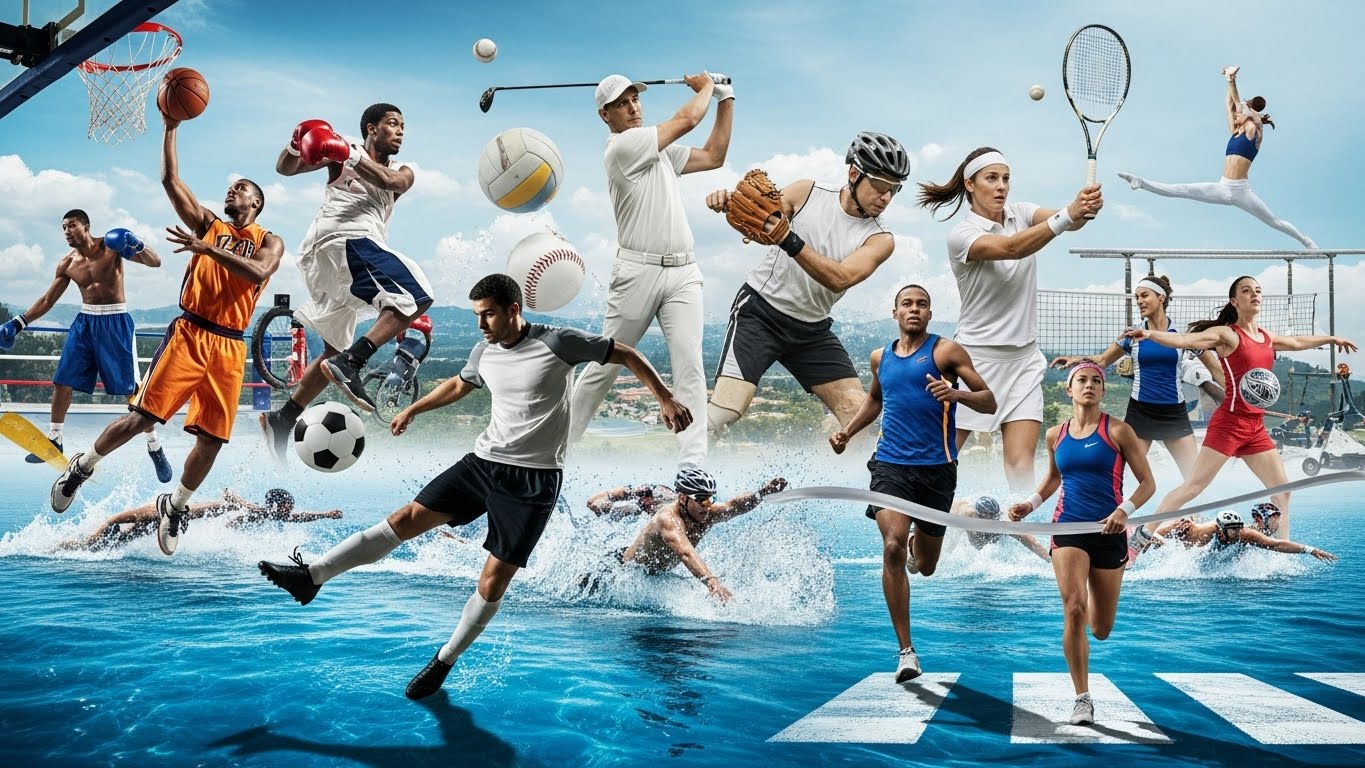

Sports have long been an essential part of human culture. Whether it’s the thrill of competition, the sense of community, or the celebration of physical prowess, sports have touched every corner of the globe, crossing cultures, borders, and generations. The world of sports is dynamic, continually evolving and shaping societies in ways that go beyond mere entertainment. From the ancient Olympic Games to the modern era of high-tech arenas and international tournaments, sports have always mirrored human progress and the pursuit of excellence. This blog post aims to explore the diverse history, evolution, and profound impact of sports on individuals, communities, and the world at large.
The Origins of Sports: From Ritual to Recreation
Sports are as old as civilization itself. The earliest forms of physical competition were often tied to rituals, military training, or religious ceremonies. In ancient Egypt, for example, hunting and physical competitions were seen as demonstrations of strength and skill, often associated with the gods. Early forms of sports were intertwined with cultural beliefs, and competitions were held to honor the deities or mark important milestones in the community’s life.
However, the idea of structured and organized competition began to take shape with the ancient Greeks. The ancient Olympic Games, held every four years starting in 776 BC, are perhaps the most famous early example of sports serving as a major cultural and societal event. Initially, the Olympics were a religious festival in honor of Zeus, but they quickly became a platform for showcasing athletic skill, fostering competition, and promoting unity among the Greek city-states. This tradition of honoring the human form through sport continued to grow throughout history and has remained a core tenet of modern sports.
Across other ancient civilizations, such as the Chinese, Mesoamerican, and Indian cultures, sporting practices were similarly deeply rooted in tradition. The Chinese practiced archery, polo, and martial arts, while the Maya played a ball game known as “Ōllamaliztli,” which is believed to be a precursor to modern-day soccer.
The Rise of Modern Sports: Globalization and Professionalism
Fast forward to the 19th and early 20th centuries, and sports underwent a major transformation. Industrialization, urbanization, and increased leisure time allowed for the proliferation of organized sports. The rise of public schools and universities, particularly in Europe and North America, also contributed to the formation of standardized rules and governing bodies for sports.
Football (or soccer, as it is known in certain countries) became popular during this period, thanks in part to the establishment of the Football Association in England in 1863, which set the first standardized rules for the game. As the sport grew in popularity, football clubs began to form in various countries, establishing the foundation for modern-day professional football leagues such as the English Premier League, La Liga in Spain, and Serie A in Italy.
In North America, sports such as baseball, basketball, and American football began to take shape during the late 19th and early 20th centuries. The formation of professional leagues for these sports helped establish them as major fixtures in the cultural fabric of their respective nations. Baseball, for instance, quickly became a symbol of American identity, while basketball was invented in 1891 by James Naismith, ultimately becoming a global sport played in countries all over the world.
The early 20th century also saw the birth of the modern Olympic Games in 1896, marking the reemergence of international competition on a grand scale. As the Olympics grew, they became a beacon of global unity, promoting the values of peace, friendship, and fair competition. Over time, sports expanded beyond regional or national competitions, culminating in the development of world-renowned events like the FIFA World Cup, the Super Bowl, and the Tour de France.
The Influence of Technology on Sports
The relationship between technology and sports is perhaps one of the most transformative aspects of the modern sports landscape. Technological innovations have not only improved how athletes perform but have also changed how fans experience sports.
Advancements in Equipment
The development of new materials and technologies has had a profound impact on the equipment used in sports. Take tennis rackets as an example. Early rackets were made of wood, which limited power and control. Over time, they were replaced with composite materials like graphite and carbon fiber, allowing for lighter, stronger, and more durable rackets. These improvements have enabled players to hit faster and more precise shots, changing the way the game is played.
In football and rugby, advancements in helmet design, padding, and protective gear have made the sports safer for players. Modern materials like Kevlar and other high-tech fabrics have allowed for better protection against injuries while maintaining the mobility needed to perform at the highest level.
The Digital Revolution: Broadcasting and Streaming
Broadcasting has played a key role in the globalization of sports. In the mid-20th century, television brought sports into living rooms across the world, with major events like the Super Bowl and the FIFA World Cup being watched by millions of viewers worldwide. Sports broadcasters played a central role in popularizing sports and making them more accessible to the general public.
As technology advanced, the way we consume sports evolved even further. The rise of the internet and streaming services has allowed fans to watch games from virtually anywhere in the world, on devices ranging from smartphones to smart TVs. This digital revolution has made sports more accessible, connecting fans with teams, athletes, and competitions in ways that were once unimaginable.
In addition to live broadcasts, digital platforms have enabled sports fans to access highlight reels, interviews, stats, and analysis at the click of a button. Social media platforms like Twitter, Instagram, and TikTok have allowed athletes to interact with fans and share behind-the-scenes content, further enhancing the global connection between sports figures and their audiences.
Data Analytics: The New Frontier
One of the most significant technological advancements in sports in recent years is the use of data analytics. Teams and athletes are now able to track and analyze performance metrics in real-time, using data to improve strategies, training, and even injury prevention. This has led to a new era of “quantifiable” sports, where everything from a player’s heart rate to their foot placement is analyzed for peak performance.
In basketball, for example, player tracking systems can measure how fast a player runs, how many steps they take, and even how effective their shooting angle is. This data is then used by coaches to optimize player performance, and it also helps in developing strategies for individual matchups. Soccer teams use similar analytics to track player movement and possession statistics, making it easier to predict how certain formations will perform against specific opponents.
The Social and Cultural Impact of Sports
While sports have always been about competition, their impact goes far beyond the playing field. They have become a vehicle for social change, cultural exchange, and personal development. At a societal level, sports often provide a sense of community, fostering pride, unity, and identity.
Sports as a Tool for Social Change
Throughout history, athletes have used their platforms to raise awareness about important social issues. One of the most iconic examples of this was in 1968, when American sprinters Tommie Smith and John Carlos raised their fists in a Black Power salute during the medal ceremony at the Mexico City Olympics. Their silent protest became a symbol of the civil rights movement and is remembered as one of the most powerful moments in Olympic history.
Today, athletes continue to be at the forefront of social change. The rise of movements like Black Lives Matter has seen professional athletes from various sports use their influence to address racial inequality, police brutality, and other forms of systemic injustice. By kneeling during the national anthem or speaking out on social media, athletes have shown that sports can be a platform for change and progress.
The Global Reach of Sports
Sports have a unique ability to bring people together across cultures and borders. Whether it’s the Olympic Games or the World Cup, international sporting events foster global unity. These events not only promote friendly competition but also encourage cultural exchange, where athletes from diverse backgrounds meet and interact. Sports serve as a universal language, bridging the gap between nations and promoting a shared sense of humanity.
Sports can also have a profound impact on local communities. In many parts of the world, particularly in underserved regions, sports offer opportunities for youth to build confidence, develop skills, and escape from the challenges of daily life. Community sports programs are often integral in fostering social cohesion, especially in areas affected by poverty or conflict.
The Economic Impact of Sports
Sports are also an economic powerhouse. The global sports industry is worth billions of dollars, with revenues coming from ticket sales, merchandise, broadcasting rights, and sponsorships. Professional sports leagues, such as the National Football League (NFL), the National Basketball Association (NBA), and the English Premier League (EPL), generate immense amounts of money through their global fanbases.
Hosting major sporting events can also have significant economic benefits for cities and countries. The 2016 Summer Olympics in Rio de Janeiro, for instance, spurred infrastructure development and attracted millions of tourists, boosting local businesses and creating jobs. However, the costs associated with hosting these events can also be high, and the long-term economic benefits can be a subject of debate.
Looking to the Future: Trends in Sports
As we move forward, the future of sports seems poised to be shaped by even more technological advancements. Virtual reality (VR) and augmented reality (AR) are set to change how we experience sports, with fans being able to watch games from different angles or even “sit” courtside from their living rooms. Esports, competitive video gaming, continues to grow at a rapid pace and is expected to become a dominant force in the global sports landscape.
Artificial intelligence (AI) could also revolutionize training methods, helping athletes maximize their potential. AI-powered tools are already being used to analyze player data and improve training programs, and as the technology continues to evolve, it may play an even more central role in the future of sports.